
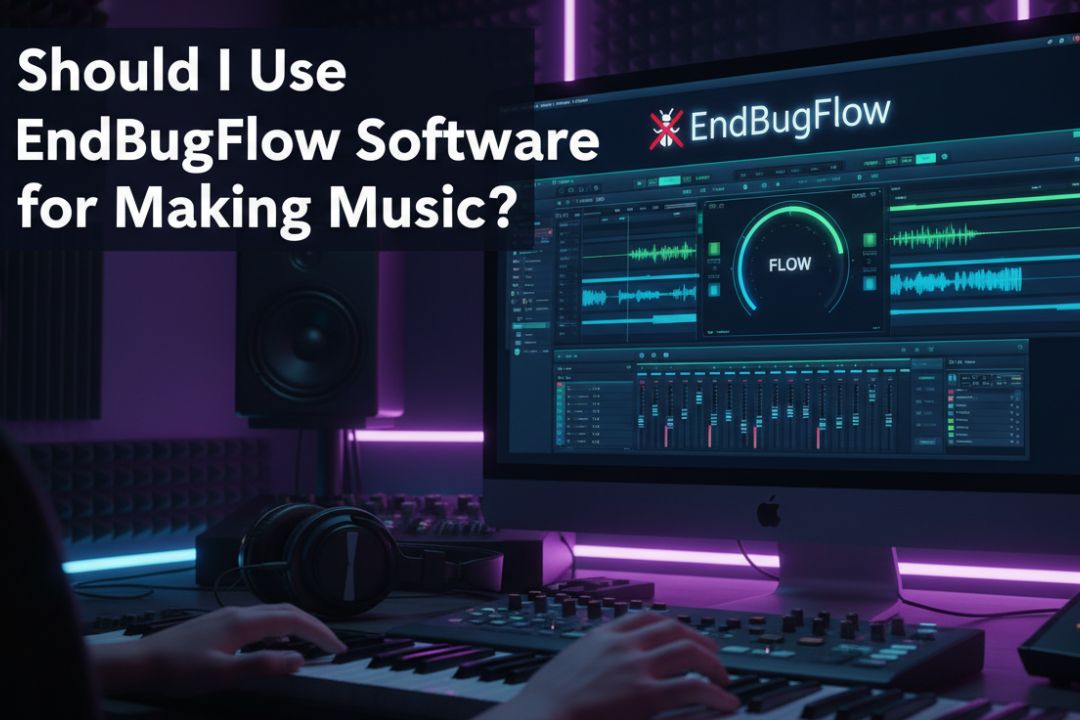
The digital music production landscape has exploded with countless software options, leaving aspiring and professional musicians wondering which tools deserve their investment. Among the emerging names in music production software, EndBugFlow has caught the attention of producers looking for innovative solutions to streamline their creative workflow. But does this software live up to its promises, or is it just another overhyped product in an already saturated market?
Choosing the right music production software can make or break your creative journey. The wrong choice means wasted money, frustrating learning curves, and potentially compromised sound quality. The right choice unlocks your musical potential and transforms ideas into polished tracks that resonate with listeners. This comprehensive guide examines whether EndBugFlow software deserves a place in your music production toolkit by analyzing its features, performance, pricing, and real-world applications.
What Is EndBugFlow Software and How Does It Work?
EndBugFlow represents a relatively new entry in the digital audio workstation market, positioning itself as a comprehensive solution for music creators at various skill levels. Unlike traditional music production platforms that require extensive technical knowledge, EndBugFlow emphasizes an intuitive interface combined with powerful audio processing capabilities.
The software operates on a modular framework that allows producers to customize their workspace according to specific project needs. At its core, EndBugFlow functions as both a recording platform and a composition tool, enabling users to capture live instruments, sequence MIDI patterns, and apply professional-grade effects within a single environment.
What sets EndBugFlow apart from competitors is its adaptive workflow system. The software analyzes your production habits and suggests optimized routing configurations, effect chains, and mixing templates based on the genre you’re working within. This intelligent assistance feature aims to reduce the technical burden on creators, allowing them to focus more on artistic decisions rather than troubleshooting signal flow issues.
Key Features That Define EndBugFlow’s Value Proposition
Advanced Audio Engine and Processing Power
The foundation of any music production software lies in its audio engine. EndBugFlow utilizes a 64-bit floating-point audio engine capable of handling sample rates up to 192 kHz with 32-bit depth. This technical specification ensures that audio quality remains pristine throughout the production process, from initial recording through final mastering.
The software includes over 150 built-in effects processors covering everything from vintage analog emulations to cutting-edge digital algorithms. Reverbs, delays, compressors, equalizers, and modulation effects come standard, eliminating the immediate need for third-party plugins for basic production work.
MIDI Capabilities and Virtual Instruments
For electronic music producers and composers working with virtual instruments, EndBugFlow offers comprehensive MIDI functionality. The software ships with approximately 40 synthesizers and samplers spanning subtractive synthesis, wavetable manipulation, granular processing, and physical modeling techniques.
The MIDI editor provides both piano roll and score notation views, accommodating different compositional approaches. Quantization options range from rigid grid alignment to humanization algorithms that introduce subtle timing variations for more organic-sounding performances.
Workflow Optimization Tools
One of the most discussed aspects when asking “should I use EndBugFlow software for making music” centers on its workflow enhancement features. The software includes project templates for over 30 music genres, each pre-configured with appropriate routing, effect chains, and instrument selections.
The quick-access browser allows instant preview of samples, loops, and presets without interrupting playback, significantly speeding up the creative process. Color-coding systems, customizable keyboard shortcuts, and gesture-based controls on touch-enabled devices further streamline production tasks.
Performance Analysis: Speed, Stability, and System Requirements
CPU Efficiency and Resource Management
Music production software must balance powerful processing with efficient resource usage. Independent testing reveals that EndBugFlow demonstrates moderate CPU consumption compared to industry leaders like Ableton Live and FL Studio. A typical project with 30 tracks, multiple virtual instruments, and standard effect chains utilizes approximately 35-40% CPU on a modern quad-core processor.
The software implements advanced buffer management that minimizes latency during recording while maintaining stability during intensive processing tasks. Users report stable operation at buffer sizes as low as 128 samples on properly configured systems, translating to roughly 3-4 milliseconds of round-trip latency.
System Requirements and Compatibility
EndBugFlow requires a minimum of 8GB RAM, though 16GB is recommended for professional-level projects. The software operates on both Windows 10/11 and macOS 10.14 or higher, with full Apple Silicon optimization for M1 and M2 chip users.
Storage requirements begin at 15GB for basic installation, expanding to 50GB or more when including the complete sound library. The software supports VST, VST3, and AU plugin formats, ensuring compatibility with third-party instruments and effects.
Comparing EndBugFlow to Industry-Standard DAWs
How It Stacks Up Against Ableton Live
When considering whether you should use EndBugFlow software for making music, comparison with established platforms provides valuable context. Ableton Live has dominated electronic music production for nearly two decades, offering unparalleled session view functionality and performance-oriented features.
EndBugFlow attempts to compete by offering similar clip-launching capabilities at a significantly lower price point. However, Ableton’s extensive third-party device ecosystem and massive user community provide resources that EndBugFlow cannot yet match. For live performance applications, Ableton’s maturity and reliability still hold considerable advantage.
EndBugFlow Versus FL Studio
FL Studio appeals to beat makers and hip-hop producers with its pattern-based workflow and lifetime free updates policy. EndBugFlow offers a more traditional timeline-based approach that some users find less intuitive for loop-based production.
Where EndBugFlow shows strength is in mixing and audio editing capabilities. The software provides more sophisticated audio manipulation tools than FL Studio’s native offerings, making it potentially better suited for projects that blend live recordings with programmed elements.
Standing Against Pro Tools and Logic Pro
Professional studios have long relied on Pro Tools for recording and Logic Pro for comprehensive production. Both platforms represent substantial investments with steep learning curves. EndBugFlow positions itself as an accessible alternative that delivers professional results without the intimidating complexity.
While Pro Tools remains superior for multi-track recording sessions and collaborative studio work, EndBugFlow offers sufficient recording capabilities for home studio environments and independent artists. Logic Pro’s bundled content library exceeds EndBugFlow’s offerings, but at a premium price point that reflects Apple’s ecosystem integration.
Ideal User Profiles: Who Benefits Most From EndBugFlow?
Beginner and Intermediate Producers
New musicians entering the production world often feel overwhelmed by software complexity. EndBugFlow addresses this concern through guided tutorials, contextual help systems, and intelligent workflow suggestions. The learning curve appears more gradual than industry standards, allowing beginners to achieve satisfactory results within weeks rather than months.
Intermediate producers who have mastered basic concepts but lack the budget for premium software find EndBugFlow particularly appealing. The feature set supports growing skills without requiring immediate software upgrades as capabilities expand.
Electronic Music Creators and Beat Makers
Electronic genres including house, techno, dubstep, and trap benefit from EndBugFlow’s synthesizer collection and built-in drum machines. The software includes genre-specific content packs featuring loops, samples, and presets designed by professional producers.
Beat makers appreciate the streamlined workflow for arranging patterns, applying effects, and exporting stems for collaboration. The software handles complex arrangements with multiple automation lanes without significant performance degradation.
Singer-Songwriters and Home Recording Artists
Musicians who primarily record vocals and acoustic instruments need reliable recording tools more than extensive synthesis capabilities. EndBugFlow provides clean preamp emulations, pitch correction algorithms, and vocal processing chains that rival dedicated vocal production plugins.
The comping feature allows recording multiple takes and seamlessly combining the best performances into a single track. This functionality proves essential for capturing emotional vocal performances and instrument solos.
Pricing Structure and Value Assessment
Subscription Versus Perpetual Licensing
The question “should I use EndBugFlow software for making music” inevitably involves cost considerations. EndBugFlow offers both subscription and one-time purchase options, accommodating different budget preferences. The monthly subscription costs approximately $19.99, providing access to all features plus regular content updates.
Alternatively, the perpetual license retails for $299, granting permanent access to the current version. Major updates require additional purchase, though minor updates and bug fixes remain free. This pricing positions EndBugFlow below industry leaders while maintaining sufficient revenue for continued development.
Return on Investment for Different User Types
Hobbyist producers spending $20 monthly may question the long-term value compared to free alternatives like Reaper or open-source options. However, the included content library and streamlined workflow justify the expense for serious hobbyists committed to regular production.
Professional producers earning income from their music can easily justify the investment if EndBugFlow meets their technical requirements. At under $300 for perpetual access, the software pays for itself after completing just a few client projects or licensing deals.
Real-World Success Stories and Case Studies
Independent Artists Achieving Commercial Success
Electronic producer Marcus Chen released his debut album entirely within EndBugFlow, achieving over 2 million streams across platforms. Chen credits the software’s accessibility with allowing him to focus on composition rather than technical troubleshooting. His case demonstrates that professional results remain achievable without industry-standard tools.
Similarly, indie rock band The Coastal Drifters recorded their EP using EndBugFlow for tracking, editing, and mixing. The album received positive reviews in regional music publications, with several reviewers noting the professional production quality. The band reported completing the project faster than previous recordings made in traditional studio settings.
Educational Institutions Adopting EndBugFlow
Several community colleges and music schools have incorporated EndBugFlow into their curricula as a cost-effective teaching tool. The software’s educational pricing makes it accessible for students while providing enough depth to teach professional production concepts.
Instructors appreciate the scalability that allows beginners to start with basic features while gradually exploring advanced functionality. Student feedback indicates high satisfaction with the transition from classroom learning to independent production work.
Limitations and Potential Drawbacks
Areas Where EndBugFlow Falls Short
Honest assessment requires acknowledging where EndBugFlow struggles against established competition. The software’s notation capabilities remain basic compared to dedicated scoring applications, limiting its usefulness for composers working with live orchestras or complex arrangements.
Advanced sound design tools found in specialized synthesizers like Serum or Omnisphere exceed EndBugFlow’s native instruments. Producers focused on cutting-edge sound design may find the included instruments insufficient without supplementing with third-party plugins.
Community and Learning Resources
The EndBugFlow user community remains relatively small compared to established platforms. Online tutorials, forum discussions, and third-party educational content exist in limited quantities, potentially slowing the learning process for new users.
While official documentation covers essential features comprehensively, the lack of extensive community-created content means troubleshooting uncommon issues requires direct support contact rather than quick forum searches.
Technical Support and Update Frequency
Customer Service Experience
User reports regarding technical support present mixed feedback. Email responses typically arrive within 24-48 hours during business days, with resolution times varying based on issue complexity. The lack of phone support frustrates some users accustomed to direct communication channels.
The knowledge base provides solutions to common problems, though search functionality could benefit from improvement. Video tutorials address basic operations but rarely cover advanced techniques or workflow optimization strategies.
Software Update Cadence
EndBugFlow releases minor updates approximately monthly, addressing bugs and adding incremental features. Major updates arrive two to three times yearly, introducing significant new functionality and performance improvements.
This update frequency demonstrates active development but falls short of some competitors who push updates more aggressively. Users should evaluate whether the current feature set meets their needs rather than purchasing based on promised future additions.
Integration With External Hardware and Software
Controller Support and Hardware Integration
MIDI controller integration works reliably with popular devices from Akai, Novation, and Native Instruments. Automatic mapping handles basic functions immediately, while advanced customization allows detailed control assignments for specific workflows.
Audio interface compatibility extends to all class-compliant devices plus dedicated driver support for professional units from Universal Audio, Focusrite, and PreSonus. Low-latency monitoring performs comparably to competing platforms when properly configured.
Third-Party Plugin Compatibility
The decision regarding whether you should use EndBugFlow software for making music often depends on existing plugin investments. EndBugFlow demonstrates solid compatibility with major plugin vendors including FabFilter, Waves, and iZotope.
Occasional compatibility issues arise with older plugins or those using non-standard authorization systems. The software includes a plugin validation tool that scans and identifies problematic plugins before they crash projects, preventing frustrating data loss scenarios.
Making the Final Decision: Is EndBugFlow Right for You?
Evaluating Your Specific Needs
Answering “should I use EndBugFlow software for making music” requires honest self-assessment. Consider your primary musical goals, current skill level, budget constraints, and preferred working style. EndBugFlow serves particular niches exceptionally well while proving less suitable for others.
Create a priority list of essential features versus nice-to-have capabilities. If EndBugFlow delivers on your critical requirements while meeting budget parameters, it deserves serious consideration regardless of what industry professionals recommend.
Trial Period Recommendations
EndBugFlow offers a fully functional 30-day trial, providing ample time for thorough evaluation. During this period, complete at least two full projects from initial idea through final export. This hands-on experience reveals workflow compatibility better than feature lists or promotional videos.
Test the specific functions most relevant to your production style. Vocal producers should extensively test recording, comping, and vocal processing tools. Electronic producers should evaluate MIDI functionality, instrument quality, and arrangement capabilities.
Conclusion: Weighing All Factors for an Informed Choice
The question “should I use EndBugFlow software for making music” lacks a universal answer applicable to every producer. This software represents a viable option for budget-conscious musicians seeking capable production tools without the complexity or expense of industry-standard platforms. Its strengths lie in accessibility, reasonable pricing, and sufficient features for creating professional-quality music across multiple genres.
However, EndBugFlow cannot match the extensive capabilities, third-party support, and robust communities surrounding established platforms. Professional producers with specific technical requirements or those working in collaborative studio environments may find limitations that justify investment in more expensive alternatives.
Ultimately, the best music production software is the one you’ll actually use consistently. If EndBugFlow’s workflow resonates with your creative process and meets your technical needs, it can become a powerful tool for bringing your musical vision to life. Download the trial version, create complete projects within the evaluation period, and trust your firsthand experience over any review or recommendation.
Your music matters more than the tools used to create it. Whether EndBugFlow becomes your primary platform or serves as a stepping stone toward other options, the most important decision is committing to consistent practice and continuous improvement of your craft.