
Have you ever received a promotional email, a catalog in your mailbox, or a text message offering you a discount from a brand you once shopped with? Chances are, the company behind that message was following rules and best practices shaped by an organization most consumers have never heard of — but one that plays a massive role in how businesses reach their customers every single day.
The Direct Marketing Association, commonly known as the DMA, is a global trade body that has been at the heart of direct marketing for well over a century. Whether you are a business owner trying to grow your customer base, a marketer looking to stay compliant, or just someone curious about how targeted advertising works, understanding what the Direct Marketing Association is and what it does can give you a genuine edge.
This guide covers everything you need to know. We will walk through the history of the DMA, its core mission, the services it provides, how it affects businesses and consumers alike, and why it still matters in a world dominated by digital marketing. By the end of this article, you will have a clear picture of the Direct Marketing Association and why it continues to shape the marketing landscape around the world.
What Is Direct Marketing Association?
The Direct Marketing Association is a trade organization that represents companies and professionals involved in data-driven and direct marketing. Its primary purpose is to promote responsible and effective marketing practices, advocate for the industry at a regulatory level, and provide its members with the tools, research, and education they need to succeed.
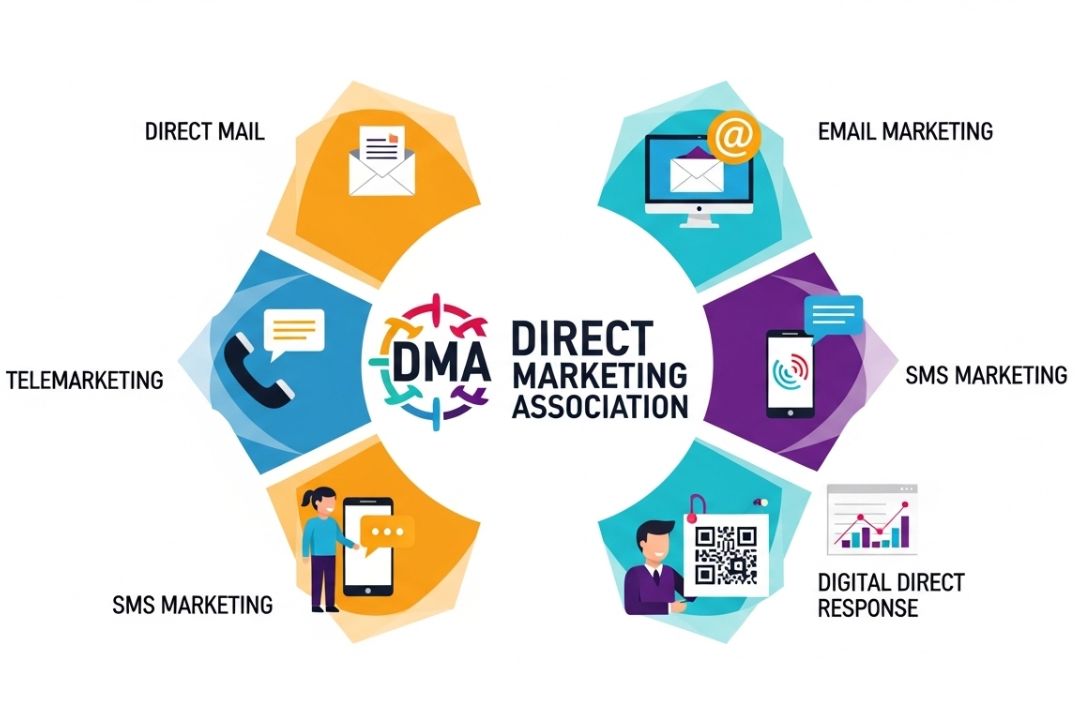
At its core, the Direct Marketing Association acts as a bridge between marketers, regulators, and consumers. It sets standards that protect consumers from unwanted or misleading communications while also defending the rights of businesses to reach their customers through direct channels such as email, direct mail, telemarketing, SMS, and digital advertising.
Key insight: The Direct Marketing Association is not a government body. It is a self-regulatory trade organization, meaning its members voluntarily agree to follow its ethical code and guidelines in exchange for credibility, resources, and advocacy support.
The organization has had different names over the years and has evolved significantly, especially as digital marketing took over from traditional direct mail and print catalogs. Today, its influence reaches businesses in nearly every industry, from retail and financial services to nonprofit organizations and healthcare providers.
A Brief History of the Direct Marketing Association
Understanding what the Direct Marketing Association is today requires a look at where it came from. The organization has roots stretching back over a hundred years, making it one of the oldest marketing trade bodies in the world.
The Early Years
The DMA was originally founded in 1917 in the United States as the Direct Mail Advertising Association. At that time, direct mail was the dominant form of targeted marketing, and businesses relied heavily on printed catalogs, letters, and flyers to reach customers. The organization was established to bring professionalism and ethical standards to a rapidly growing but largely unregulated industry.
Over the following decades, the association expanded its scope as new marketing channels emerged. Radio, television, and telephone marketing all eventually fell under its umbrella, and the name was updated accordingly. By the 1970s, the organization had rebranded as the Direct Marketing Association, reflecting the much broader range of channels and tactics its members were using.
The Digital Transformation
The most dramatic shift in the organization’s history came with the rise of the internet and digital marketing. Email marketing, online advertising, social media campaigns, and mobile messaging completely transformed how businesses communicate with customers. The Direct Marketing Association adapted by expanding its guidelines, adding new resources, and placing a much stronger emphasis on data privacy and permission-based marketing.
In 2016, the UK’s DMA played a central role in shaping the industry’s response to major new data protection laws in Europe, including the General Data Protection Regulation (GDPR), which came into effect in 2018. This demonstrated just how important the organization had become in the regulatory landscape.
DMA Becomes Data & Marketing Association
In the United States, the Direct Marketing Association rebranded in 2017 to the Data & Marketing Association to better reflect the shift toward data-driven marketing strategies. The new name signaled a recognition that modern marketing is inseparable from data analytics, customer profiling, and digital targeting. However, both the original name and the abbreviation DMA have remained in common use, and many professionals still refer to it as the Direct Marketing Association.
The Core Mission and Goals of the Direct Marketing Association
The mission of the Direct Marketing Association has always centered on three pillars: promoting ethical marketing, advocating for the industry, and delivering value to members. Let us look at each of these in detail.
Promoting Ethical and Responsible Marketing
One of the most important roles of the Direct Marketing Association is setting ethical standards for its members. The organization publishes a comprehensive code of ethics that covers how businesses should collect, store, and use customer data. It also sets rules around how members can contact customers and what kind of messaging is acceptable.
This matters because unethical marketing — such as sending unsolicited messages, using deceptive subject lines, or selling customer data without consent — erodes consumer trust and ultimately hurts the entire industry. By holding its members to higher standards, the DMA helps ensure that direct marketing remains effective and legitimate.
Advocating for the Industry
Marketing is subject to a complex web of regulations, from anti-spam laws and telemarketing restrictions to data protection rules and advertising standards. The Direct Marketing Association actively engages with governments and regulators to represent the interests of the marketing industry in these policy discussions.
For example, when the CAN-SPAM Act was being developed in the United States, the DMA was at the table providing input on how the law should be structured to protect consumers without making it impossible for legitimate businesses to communicate with their audiences. Similarly, in the UK and Europe, the DMA has been deeply involved in shaping how GDPR has been interpreted and applied in marketing contexts.
Delivering Value to Members
Beyond ethics and advocacy, the Direct Marketing Association provides a wide range of practical benefits to its members. These include access to industry research, training programs, networking events, compliance tools, and benchmarking data that helps businesses understand how their marketing performance compares to industry averages.
Key Services and Resources Offered by the DMA
When marketers and businesses join the Direct Marketing Association, they gain access to a rich ecosystem of resources designed to help them work smarter and more responsibly. Here is a breakdown of the most valuable services the organization provides.
Industry Research and Benchmarking
The DMA regularly publishes research reports covering all major areas of direct and data-driven marketing. These reports include statistics on email open rates, direct mail response rates, consumer attitudes toward marketing, return on investment data across different channels, and much more.
For example, DMA research has consistently shown that email marketing delivers one of the highest returns on investment of any marketing channel. Studies published by the organization have found that every dollar spent on email marketing can generate an average return of around 42 dollars — a statistic widely cited across the marketing industry.
Training and Professional Development
The Direct Marketing Association offers training courses, webinars, certifications, and workshops covering everything from data analytics and marketing automation to GDPR compliance and creative copywriting. These programs are designed for marketers at every level, from beginners just starting out to senior professionals looking to deepen their expertise.
In the UK, the DMA runs the Intelligent Marketing qualification, a recognized professional credential that helps marketers demonstrate their competence and commitment to ethical practices. Similar programs exist in other regions where DMA-affiliated organizations operate.
Compliance Tools and Legal Guidance
Staying compliant with marketing laws and regulations is one of the biggest challenges businesses face today. The Direct Marketing Association provides members with template privacy policies, consent management guidelines, checklists for GDPR and CAN-SPAM compliance, and access to legal experts who can advise on specific scenarios.
This is particularly valuable for small and medium-sized businesses that may not have in-house legal teams. Having access to DMA compliance resources can mean the difference between a campaign that runs smoothly and one that leads to regulatory fines or reputational damage.
Networking and Industry Events
The DMA organizes some of the most respected events in the marketing calendar, including annual conferences, awards ceremonies, and regional networking events. These gatherings bring together marketers, technology providers, agencies, and data specialists for a mix of learning, inspiration, and professional connection.
The DMA Awards, held annually in the UK, are particularly prestigious. They recognize outstanding campaigns across categories including direct mail, email, mobile, digital, and data strategy. Winning or even being shortlisted for a DMA Award is considered a significant achievement in the industry.
How the Direct Marketing Association Protects Consumers
One aspect of the Direct Marketing Association that often gets overlooked is its role in protecting consumers. Many people are unaware that the DMA runs a series of preference services that allow individuals to opt out of certain types of marketing.
The Mail Preference Service
In the United States, the DMA operates the Mail Preference Service (MPS), which allows consumers to register their address to stop receiving unsolicited direct mail from companies they have no prior relationship with. DMA member companies are required to check this list before sending marketing mail, which means registering can significantly reduce the volume of unwanted catalogs and promotional letters a household receives.
The Telephone Preference Service and Email Preference Service
Similar services exist for telephone calls and email. The Telephone Preference Service (TPS) in the UK allows people to opt out of unsolicited marketing calls. While it is managed by a separate body in the UK, the DMA plays a supporting role in promoting awareness of these services among both consumers and its members.
The Email Preference Service operates on a similar basis, giving consumers a way to reduce unwanted commercial emails from companies they have not done business with.
The DMA Code of Ethics for Consumer Protection
Beyond these preference services, the DMA’s code of ethics includes specific provisions designed to protect consumers. Members are required to:
- Provide clear and honest information about who is sending a communication and why.
- Honor opt-out requests promptly and without question.
- Never use deceptive tactics to collect personal data.
- Handle customer data securely and only for the purposes for which it was collected.
- Avoid targeting vulnerable groups, including children, with inappropriate marketing.
These protections give consumers a degree of confidence that companies bearing the DMA member seal are held to a higher standard than those that are not.
Direct Marketing Association and Key Industry Concepts
To fully understand the role of the Direct Marketing Association, it helps to understand the broader ecosystem of concepts, tools, and practices that surround it. Below are some of the most important related areas.
Data-Driven Marketing
Modern marketing is built on data. Customer data — including purchase history, browsing behavior, demographic information, and contact preferences — allows marketers to target the right people with the right message at the right time. The DMA is at the forefront of promoting responsible data-driven marketing, helping businesses harness the power of data while respecting customer privacy.
Permission-Based Marketing
One of the core principles promoted by the Direct Marketing Association is that marketing works best when consumers have given their permission to be contacted. Permission-based marketing, which means only reaching out to people who have explicitly opted in to receive communications, is not only more ethical but also more effective. Campaigns sent to opted-in audiences consistently outperform unsolicited ones in terms of open rates, click-through rates, and conversions.
Customer Relationship Management
CRM systems are a central tool in direct marketing, allowing businesses to store customer data, track interactions, and manage marketing campaigns. The DMA provides guidance on how to use CRM data responsibly and how to build customer relationships based on trust and value rather than volume and intrusion.
Marketing Automation
Marketing automation platforms allow businesses to send targeted messages to customers at scale, based on triggers such as browsing behavior, purchase history, or time since last contact. The DMA has developed guidelines around automation to help businesses use these tools in ways that feel helpful and relevant to consumers rather than spammy or intrusive.
GDPR and Data Privacy Regulations
The General Data Protection Regulation, which came into force across the European Union in May 2018, fundamentally changed how businesses collect and use personal data. The Direct Marketing Association was deeply involved in helping its members navigate this transition. The DMA published detailed guidance, hosted training sessions, and advocated for clarity on how GDPR applies specifically to marketing activities.
The DMA’s guidance on topics such as legitimate interest, consent management, and subject access requests has become a go-to resource for marketers trying to comply with GDPR and similar laws around the world.
Real-World Examples and Case Studies
Theory is useful, but real-world examples bring the role of the Direct Marketing Association to life. Here are some concrete illustrations of how the DMA’s work plays out in practice.
Case Study 1: Email Marketing Best Practices in Retail
A major UK retailer wanted to improve its email marketing performance while staying compliant with GDPR. Working with DMA guidance and attending DMA training workshops, the company restructured its consent collection process, implemented a clear preference center, and segmented its audience based on engagement levels.
The result? Open rates increased by 28%, unsubscribe rates dropped, and the company avoided any GDPR enforcement action. By following DMA best practices, the retailer was able to rebuild customer trust and significantly improve campaign performance at the same time.
Case Study 2: Nonprofit Fundraising Through Direct Mail
A nonprofit organization in the United States had been using direct mail for years but was struggling with rising costs and declining response rates. After joining the Direct Marketing Association and accessing its benchmarking data, the organization discovered that its response rates were in line with industry averages for cold prospecting mail — the problem was that it was sending too much mail to non-prospects and not enough personalized communications to existing donors.
Using DMA research and consulting services, the nonprofit redesigned its direct mail strategy, focusing on higher-quality lists and more personalized messaging. Response rates for existing donor campaigns improved by over 40%, while acquisition mailing costs dropped because the organization was targeting more precisely.
Case Study 3: DMA Awards and Campaign Innovation
A UK-based insurance company entered its customer retention email campaign into the DMA Awards and won in the email category. The campaign used behavioral data to trigger highly personalized renewal reminders and supplementary content about customer benefits, leading to a 35% improvement in renewal rates compared to the previous year.
The DMA Awards recognized not just the campaign results but also the ethical approach to data usage, the clarity of customer communications, and the quality of the creative execution. This kind of recognition helps set the benchmark for what excellent, responsible direct marketing looks like in practice.
The Direct Marketing Association’s Global Reach
While the most well-known DMA organizations are based in the United States and the United Kingdom, the principles and practices it promotes have spread globally. Many countries have their own direct marketing associations that are affiliated with or modeled after the original DMA, creating a network of organizations working toward similar goals.
In Europe, the European Direct and Interactive Marketing Association represents DMA-affiliated bodies across multiple countries. In the Asia-Pacific region, similar organizations exist in Australia, Japan, Singapore, and elsewhere. Together, these bodies form a loosely connected global network promoting responsible, data-driven marketing.
This global reach is increasingly important in a world where a single marketing campaign may involve customer data from multiple countries, each subject to its own data protection laws. DMA-affiliated organizations help businesses navigate these complexities and stay compliant across borders.
How to Join the Direct Marketing Association
Joining the Direct Marketing Association is a straightforward process, though the specific steps vary depending on which national DMA you are joining. Here is a general overview of how membership works.
Who Can Join?
Membership in the Direct Marketing Association is open to any organization involved in direct or data-driven marketing. This includes:
- Businesses that market their products or services directly to consumers or other businesses.
- Marketing agencies and consultancies that provide direct marketing services to clients.
- Technology companies that supply marketing tools such as email platforms, CRM systems, and data management software.
- Data providers and brokers that supply marketing lists and customer data.
- Nonprofit organizations that use direct marketing for fundraising and awareness campaigns.
Membership Tiers and Costs
Most DMA organizations offer multiple membership tiers, typically based on the size of the company and the level of access required. Small businesses and startups may be able to join at a relatively low annual fee, while larger enterprises pay more but receive expanded benefits such as greater access to research, more consultation hours, and enhanced visibility within the industry.
In the UK, DMA membership fees for small companies start at a few hundred pounds per year, scaling up to several thousand for major enterprises. In the US, the Data & Marketing Association similarly structures its fees based on company size and sector.
The Application Process
- Visit the DMA website: Go to the relevant national DMA’s website (dma.org.uk for the UK, thedma.org for the US).
- Complete the membership form: Provide details about your organization, its marketing activities, and the contacts who will be using the membership.
- Agree to the code of ethics: All members must formally agree to comply with the DMA’s code of practice and ethical guidelines.
- Pay the membership fee: Fees are usually paid annually, with options for monthly installments in some cases.
- Access your member benefits: Once approved, you gain access to the full range of resources, events, and support services.
Why the Direct Marketing Association Still Matters in 2025
In an era dominated by social media influencers, programmatic advertising, and AI-generated content, some people question whether a traditional trade body like the Direct Marketing Association is still relevant. The answer is a clear yes — and here is why.
Data Privacy Is More Important Than Ever
With the rise of laws like GDPR in Europe, CCPA in California, and similar legislation emerging across the globe, data privacy has never been a more pressing concern for marketers. The DMA’s expertise in this area, built up over decades, makes it an invaluable resource for businesses trying to stay on the right side of the law while still running effective campaigns.
Consumer Trust Is a Competitive Advantage
Research consistently shows that consumers are more likely to buy from brands they trust. Companies that follow DMA guidelines, display the DMA member badge, and demonstrate a commitment to ethical marketing gain a tangible advantage over competitors that do not. In a crowded marketplace, trust can be the deciding factor.
Direct Channels Are Delivering Strong ROI
Despite the explosion of digital channels, traditional direct marketing tools like email and direct mail continue to deliver exceptional returns. According to DMA research, direct mail achieves meaningful response rates even against digital alternatives, though email wins on cost per contact. Understanding how to use these channels effectively remains a critical skill for marketers.
The Marketing Landscape Is Fragmenting
With so many channels, tools, and tactics available, marketers face the constant challenge of deciding where to focus their efforts and budgets. The Direct Marketing Association provides a grounding framework — built on evidence, ethics, and industry consensus — that helps marketers cut through the noise and make better strategic decisions.
Practical Tips for Businesses Using DMA Guidelines
Whether or not you are a DMA member, the organization’s guidelines and best practices are freely available and worth following. Here are some practical ways to incorporate DMA principles into your marketing strategy.
- Audit your data collection: Review every point at which you collect customer data and make sure you are obtaining clear, informed consent where required.
- Make opt-out easy: Every marketing communication should include a simple and clearly visible way for recipients to unsubscribe or update their preferences.
- Segment your audience: Use the data you have responsibly to send relevant, targeted messages rather than blasting your entire list with every communication.
- Test and measure: Follow the DMA’s emphasis on evidence-based marketing by testing your campaigns, measuring results, and using data to improve future efforts.
- Stay current with regulations: Subscribe to DMA updates and guidance to keep pace with changing data protection laws and marketing regulations.
- Invest in training: Whether through the DMA or other professional bodies, ensuring your marketing team is well-trained in both strategy and compliance pays dividends.
Conclusion
The Direct Marketing Association has spent over a century shaping how businesses communicate with their customers. From its roots in direct mail advocacy to its modern role as a champion of data-driven, ethical marketing, the DMA has proven itself to be one of the most enduring and influential organizations in the marketing world.
Whether you are a marketer trying to run more effective and compliant campaigns, a business owner wondering whether DMA membership is worth the investment, or simply someone trying to understand why you receive certain types of marketing messages, understanding what the Direct Marketing Association is gives you valuable context.
The organization’s emphasis on ethics, evidence, and education makes it far more than just a trade body. It is a standard-setter, an advocate, a training ground, and a community for the professionals who power one of the world’s most dynamic industries.