
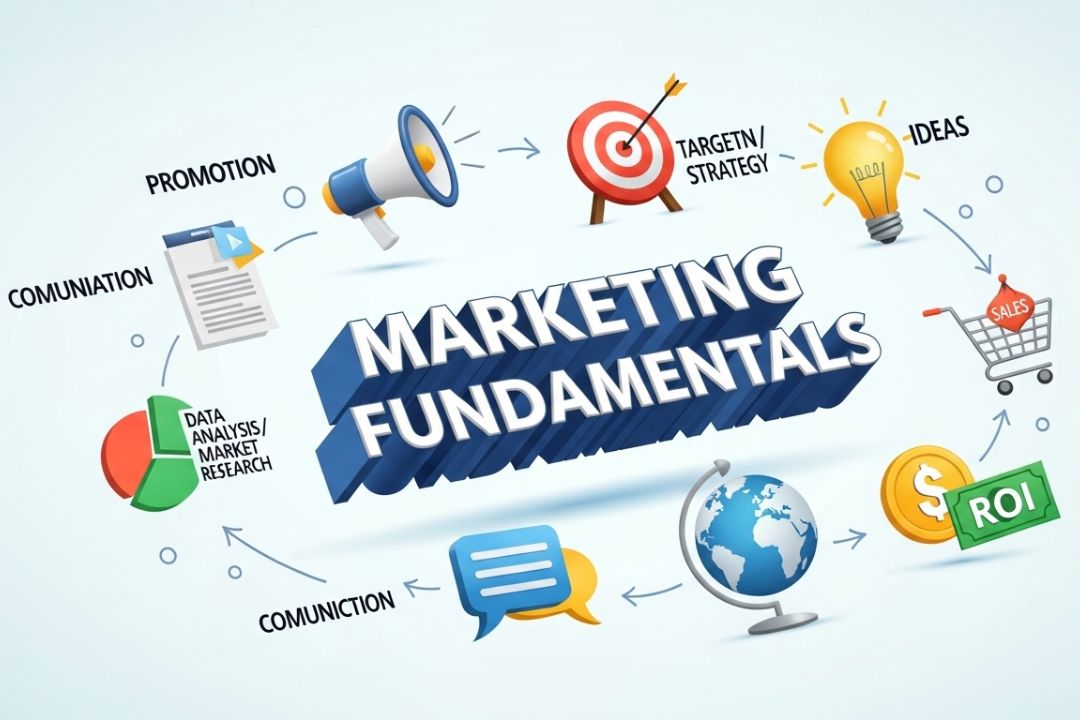
In today’s competitive business world, understanding Marketing Fundamentals is essential for anyone who wants to build a successful brand or business. Whether you are a small business owner, entrepreneur, student, or digital marketer, mastering the basics of marketing helps you attract customers, increase sales, and grow your brand.
Marketing has changed dramatically over the last decade. The rise of digital platforms, social media, and data-driven strategies has transformed how businesses communicate with their audience. However, despite these changes, the core Marketing Fundamentals remain the foundation of every successful marketing strategy.
According to recent industry reports, businesses that invest in strong marketing strategies are 13 times more likely to achieve positive ROI compared to those that don’t focus on marketing planning. This shows how powerful marketing can be when done correctly.
This article will explore the most important Marketing Fundamentals, including key marketing concepts, strategies, tools, and real-world examples. By the end of this guide, you will understand how marketing works and how to apply these principles to achieve long-term business success.
Understanding the Core Concept of Marketing
Marketing is more than simply selling a product or service. It involves understanding customer needs and creating solutions that provide value.
In simple terms, marketing is the process of:
- Identifying customer needs
- Creating products or services that meet those needs
- Communicating value to customers
- Building long-term relationships
The Marketing Fundamentals focus on delivering value to customers while achieving business goals.
Why Marketing Matters for Businesses
Marketing plays a crucial role in business growth because it helps companies:
- Increase brand awareness
- Reach new customers
- Build trust with the audience
- Generate leads and sales
- Create long-term customer loyalty
For example, companies that consistently invest in marketing grow their revenue 2–3 times faster than companies that do not prioritize marketing strategies.
The Evolution of Marketing Over Time
Marketing has evolved significantly over the years.
Traditional Marketing
Before the internet era, businesses relied on traditional marketing channels such as:
- Television advertisements
- Radio promotions
- Newspaper ads
- Billboards
- Print media
These methods focused on reaching a large audience but often lacked precise targeting.
Digital Marketing Era
Today, businesses rely heavily on digital marketing strategies, including:
- Search engine optimization (SEO)
- Social media marketing
- Email marketing
- Content marketing
- Paid advertising
Digital marketing allows businesses to target specific audiences, measure campaign performance, and adjust strategies in real time.
The Importance of Understanding Your Target Audience
One of the most important Marketing Fundamentals is knowing your audience.
A successful marketing strategy begins with understanding who your customers are and what they need.
Key Factors to Identify Your Target Audience
Businesses analyze several factors when identifying their target audience:
- Age
- Gender
- Location
- Interests
- Purchasing behavior
- Income level
For example, a company selling gaming accessories will target a different audience compared to a brand selling luxury watches.
Creating Customer Personas
A customer persona is a fictional representation of your ideal customer.
Example persona:
- Name: Alex
- Age: 25
- Interests: Technology, gaming, online shopping
- Needs: Affordable gaming equipment
Customer personas help businesses create marketing campaigns that connect directly with their audience.
The 4Ps of Marketing
The 4Ps of Marketing are a fundamental concept used by marketers worldwide. These elements help businesses create effective marketing strategies.
Product
The product is the item or service offered to customers.
Businesses must ensure their product:
- Solves a problem
- Meets customer expectations
- Provides unique value
Example: Smartphones with advanced cameras and long battery life attract modern consumers.
Price
Pricing strategies influence customer purchasing decisions.
Common pricing strategies include:
- Competitive pricing
- Premium pricing
- Discount pricing
- Psychological pricing
Companies often analyze competitors before setting prices.
Place
Place refers to where the product is sold.
Products can be distributed through:
- Online stores
- Retail outlets
- Marketplaces
- Mobile apps
For example, many brands sell products through platforms like Amazon and their own websites.
Promotion
Promotion involves communicating the value of a product.
Promotion methods include:
- Advertising
- Social media campaigns
- Influencer marketing
- Email marketing
Effective promotion ensures customers know about the product and its benefits.
The Role of Branding in Marketing Success
Branding is another critical part of Marketing Fundamentals. A strong brand creates recognition and trust.
Elements of a Strong Brand
Successful brands focus on:
- A memorable logo
- A unique brand voice
- Consistent visual identity
- A clear brand message
For example, companies like Apple and Nike are instantly recognizable due to their strong branding.
Why Branding Matters
Branding helps businesses:
- Build credibility
- Stand out from competitors
- Create emotional connections with customers
Studies show that 77% of consumers prefer to buy from brands they recognize and trust.
Content Marketing as a Powerful Strategy
Content marketing is one of the most effective modern marketing techniques.
Instead of directly selling, businesses provide valuable information to attract customers.
Types of Content Marketing
Popular forms of content marketing include:
- Blog articles
- Videos
- Infographics
- Podcasts
- Social media posts
For example, many companies publish helpful guides to educate their audience.
Benefits of Content Marketing
Content marketing helps businesses:
- Improve search engine rankings
- Build authority in their industry
- Generate organic website traffic
- Educate potential customers
Research shows that content marketing generates three times more leads than traditional advertising.
Search Engine Optimization (SEO) and Marketing
Search engine optimization is a crucial part of modern marketing.
SEO helps businesses appear in search engine results when users search for information related to their products or services.
Key SEO Components
Important SEO strategies include:
- Keyword research
- On-page optimization
- High-quality content
- Backlink building
- Technical website optimization
When done correctly, SEO can drive consistent organic traffic to a website.
Social Media Marketing in the Modern Era
Social media has become a major marketing channel.
Platforms such as Facebook, Instagram, LinkedIn, and TikTok allow businesses to connect directly with customers.
Benefits of Social Media Marketing
Businesses use social media to:
- Build brand awareness
- Promote products
- Engage with customers
- Run targeted advertising campaigns
According to global statistics, over 4.9 billion people use social media worldwide, making it one of the most powerful marketing platforms.
Email Marketing and Customer Relationship Building
Email marketing remains one of the most effective marketing channels.
Despite the growth of social media, email still provides an excellent return on investment.
Advantages of Email Marketing
Email marketing helps businesses:
- Communicate directly with customers
- Promote new products
- Share discounts and offers
- Build long-term relationships
Studies show that email marketing delivers an average ROI of $36 for every $1 spent.
Data-Driven Marketing and Analytics
Modern marketing relies heavily on data and analytics.
Businesses analyze marketing data to understand customer behavior and improve strategies.
Key Metrics Marketers Track
Common marketing metrics include:
- Website traffic
- Conversion rate
- Customer acquisition cost
- Engagement rate
- Return on investment (ROI)
By analyzing these metrics, companies can make smarter marketing decisions.
Real-Life Case Study: How Strong Marketing Builds Global Brands
One of the best examples of effective marketing is the growth of major global brands.
Many successful companies started small but used strong marketing strategies to grow rapidly.
Example Strategy Used by Successful Brands
- Clear brand messaging
- Consistent marketing campaigns
- Strong online presence
- Customer-focused products
For instance, companies that invest heavily in digital marketing strategies often reach millions of customers worldwide.
Common Marketing Mistakes Businesses Should Avoid
Even experienced businesses sometimes make marketing mistakes.
Some common errors include:
- Not understanding the target audience
- Ignoring data and analytics
- Inconsistent branding
- Focusing only on sales instead of value
- Neglecting customer feedback
Avoiding these mistakes helps businesses build stronger marketing campaigns.
Future Trends in Marketing
Marketing continues to evolve with technology and consumer behavior.
Key Marketing Trends for the Future
Some major trends include:
- Artificial intelligence in marketing
- Personalization of customer experiences
- Video marketing growth
- Voice search optimization
- Influencer marketing expansion
Businesses that adapt to these trends will stay competitive in the future.
Conclusion
Understanding Marketing Fundamentals is essential for anyone who wants to succeed in today’s business environment. From identifying your target audience to building strong branding and implementing digital strategies, these core principles help businesses attract customers and achieve long-term growth.
Successful marketing is not about quick sales—it is about building relationships, providing value, and creating trust with your audience. Businesses that consistently apply these fundamentals can create powerful brands and sustainable growth.
As marketing technology continues to evolve, the core principles will remain the same: understand your customers, deliver value, and communicate effectively.
If you want to succeed in business or digital marketing, start by mastering these Marketing Fundamentals and apply them consistently in your strategy.